

First Impressions: A Gentle Approach to Handling Newborn Foals
Flight instinct
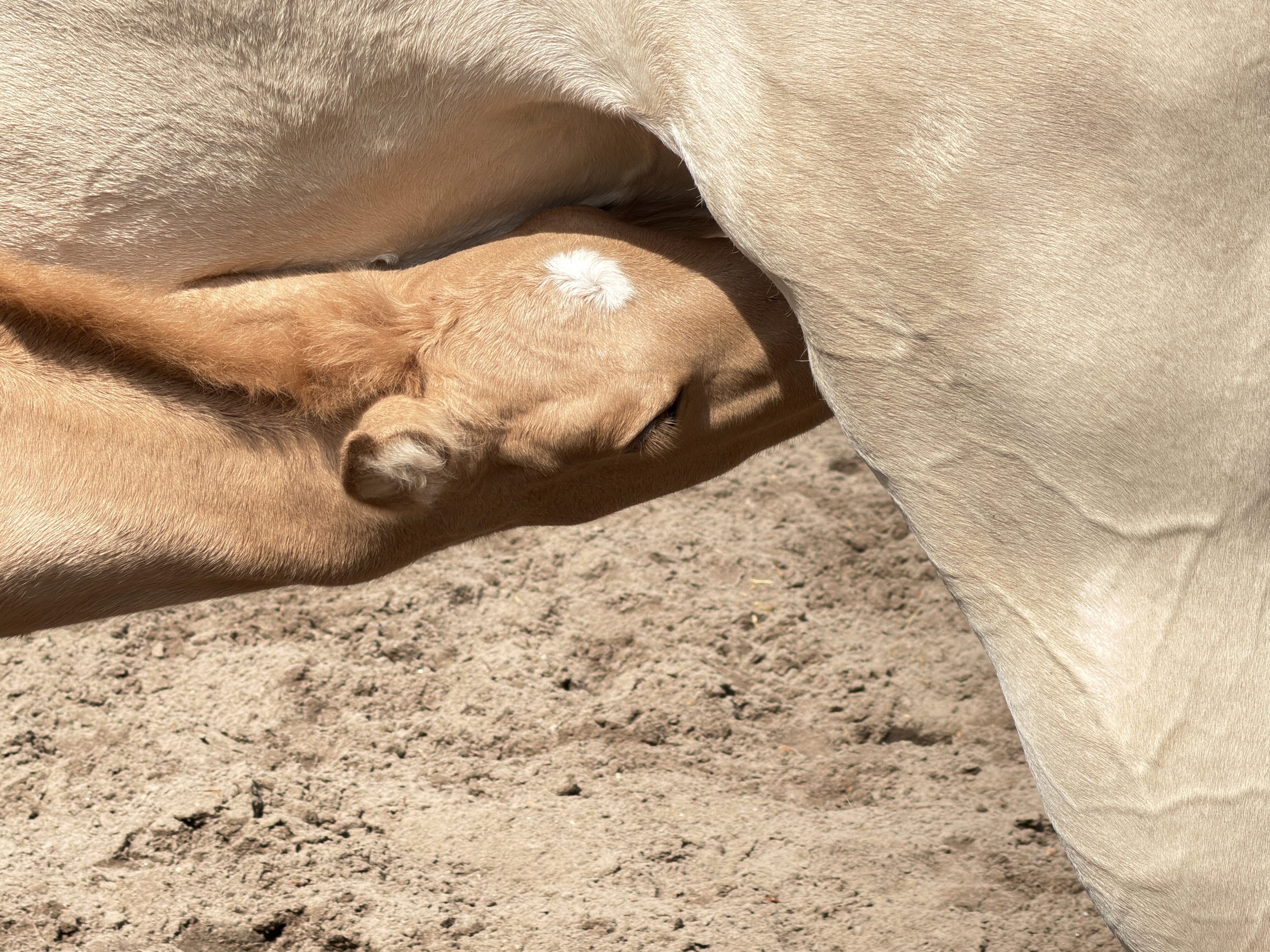
When handling a newborn foal, there are a few fundamental things that are important to realize right from the start. A foal is hardwired to be a flight animal. In those first few days, running away will always be its initial reaction to anything new or unexpected. It is crucial to understand that there are no bad intentions behind this; it is simply an inborn reflex. A newborn foal has no preconceived notions about what the world will bring, other than this deep-seated instinct to flee from danger.
It is up to us to help them overcome this instinct. We do this by being soft, slow, reliable, and logical in our movements. By offering a calm presence, their open little mind can slowly discover that it is pleasant and safe to be in your surroundings. The ultimate goal is to gently imprint into their brain that while mom is always in charge, whenever humans are involved, they are a source of safety rather than fear.
Touch
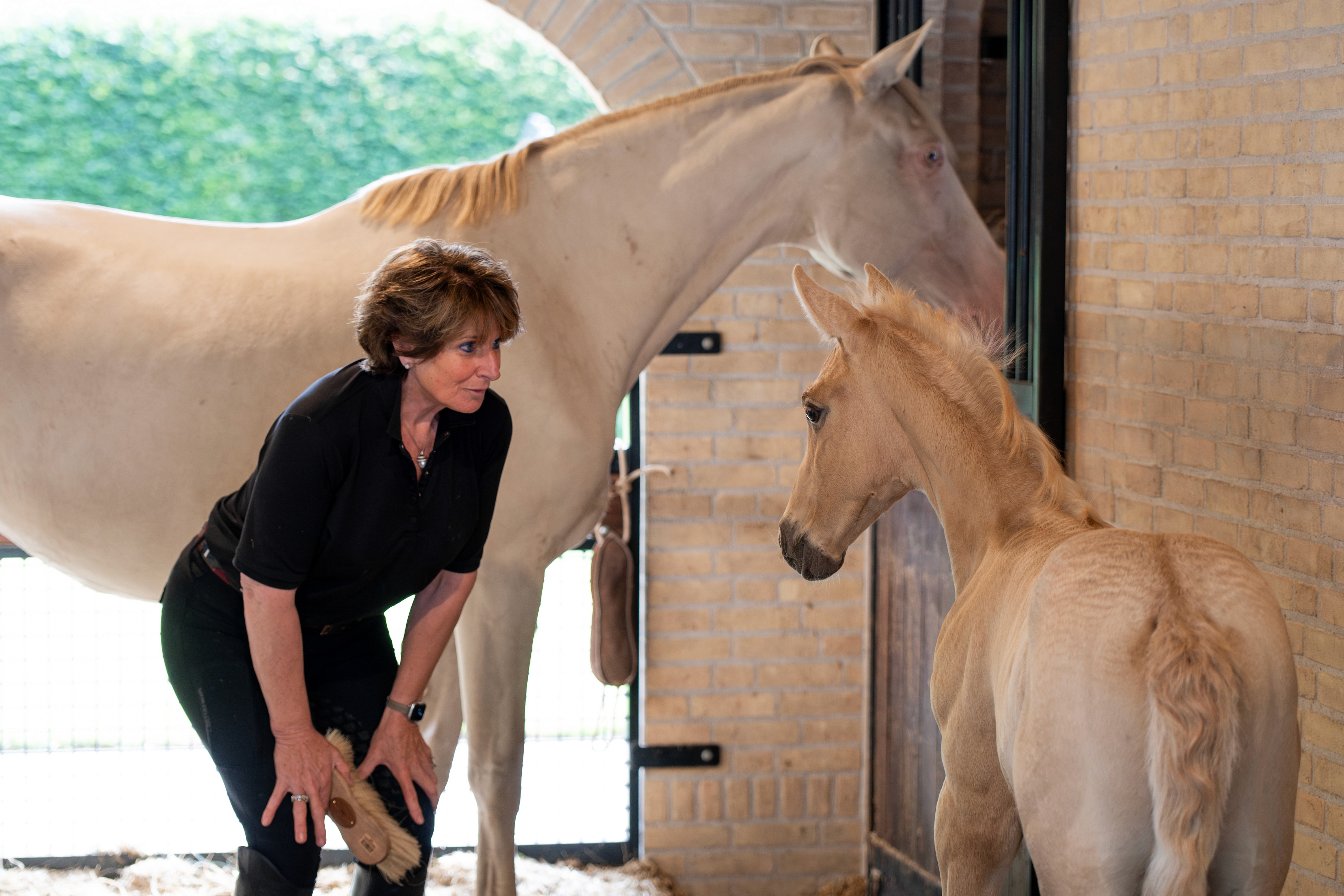
If you are lucky enough to be present at the birth, it is incredibly useful to make that first physical connection as soon as possible. Gently drying the foal with a towel and giving it a soft rub is a wonderful way to introduce human touch. In the very beginning, they often enjoy this sensation, and it serves as a positive first contact—provided, of course, that the mare is comfortable and allows you to do so.
In the days that follow, we simply spend time in or around the stable so the foal becomes accustomed to human presence. One of the best things you can do is just bring a little stool into the stable and sit down. Eventually, their natural curiosity will win over their flight instinct, and they will come over to check you out. The trick here is to be patient: do not reach out to grab them or immediately try to pet them. Just be there and let them initiate the contact.
Guiding
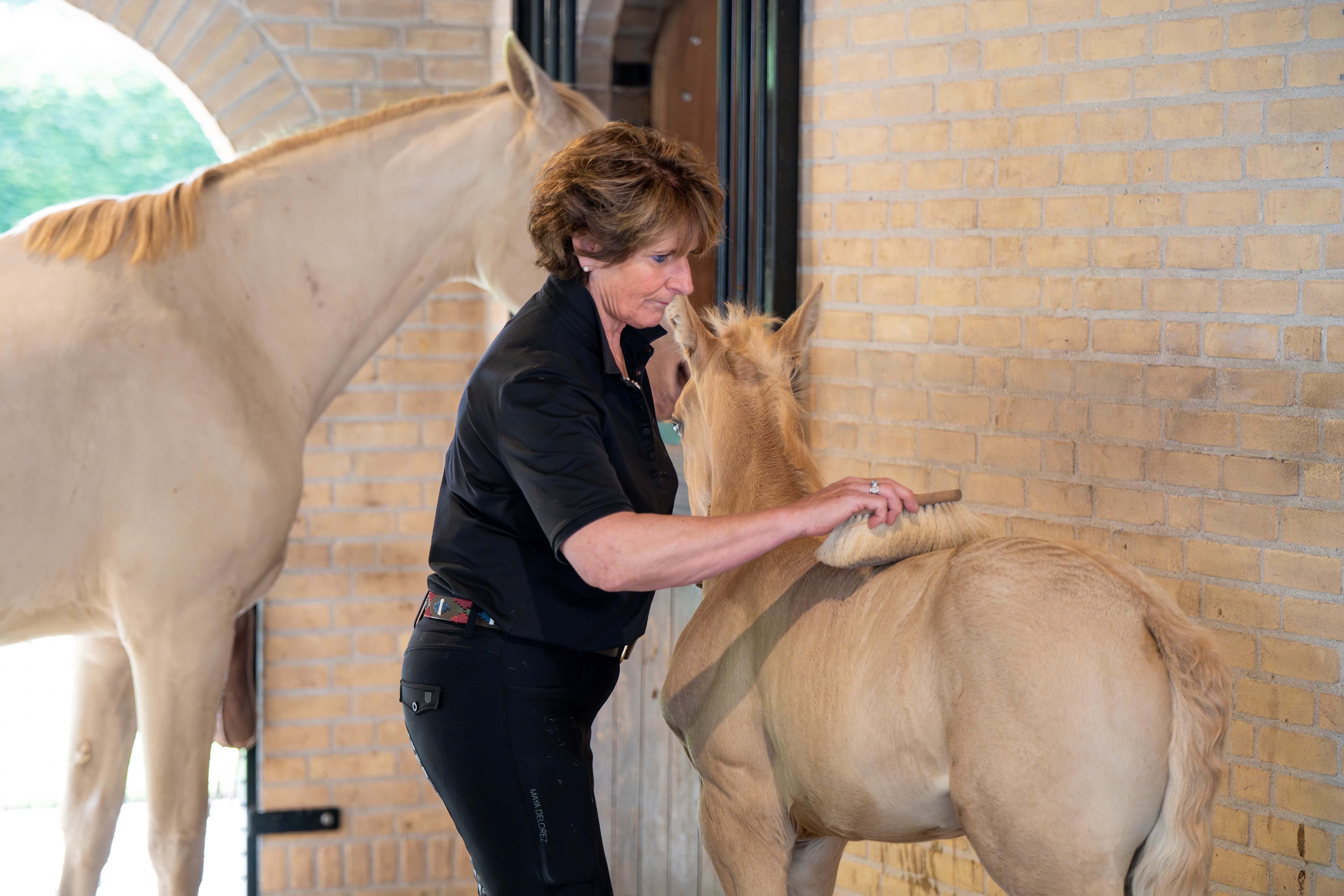
Then comes the day when you have to guide the foal outside to the field for the first time. People often guide a young foal by placing one arm in front of the chest and the other behind the hindquarters. While this method is perfectly fine, you have to be aware not to apply too much pressure. When you hold a foal this way, your upper body naturally leans over them. It is very easy to inadvertently become overwhelming and intimidating to such a small animal when you are essentially standing on top of them.
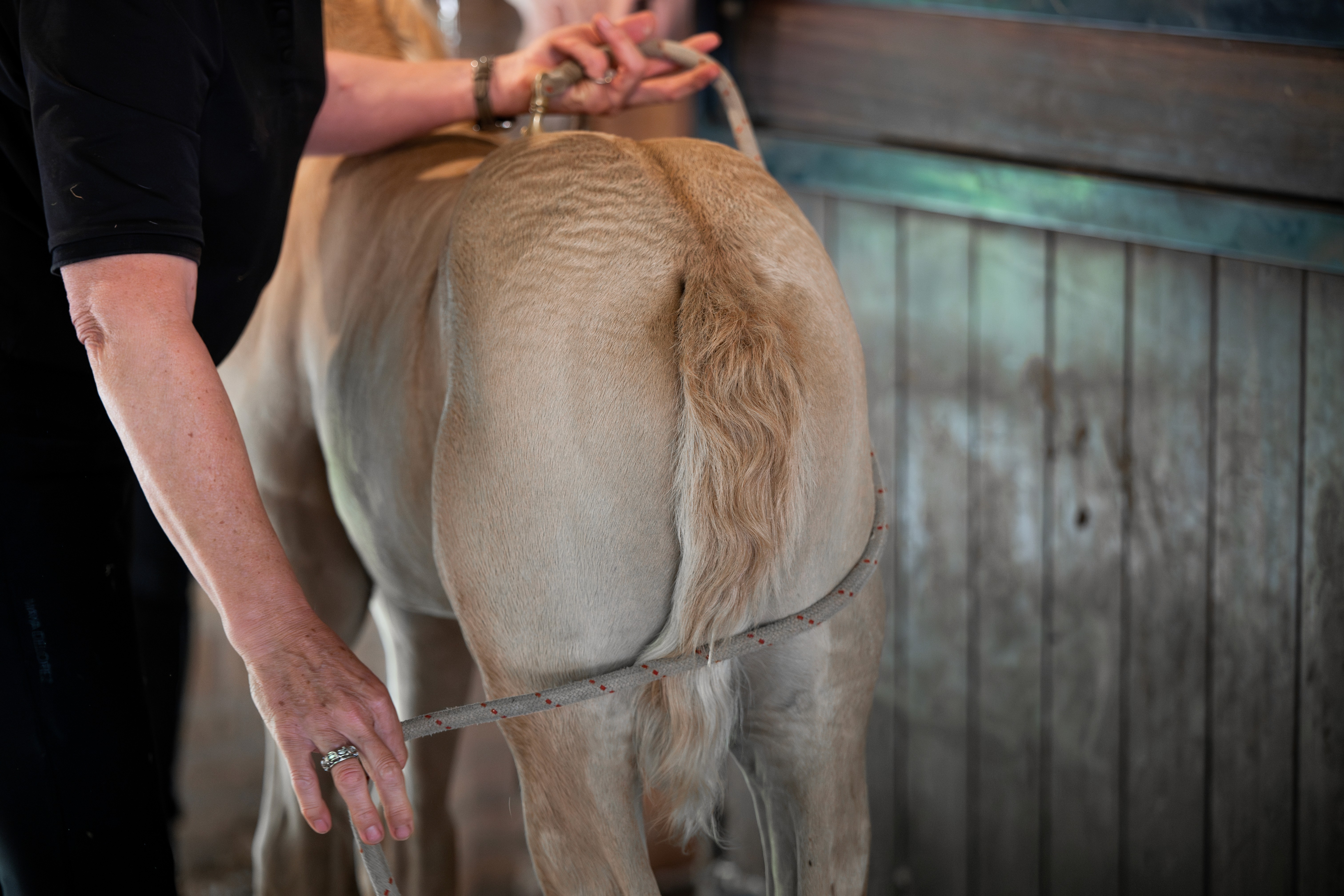
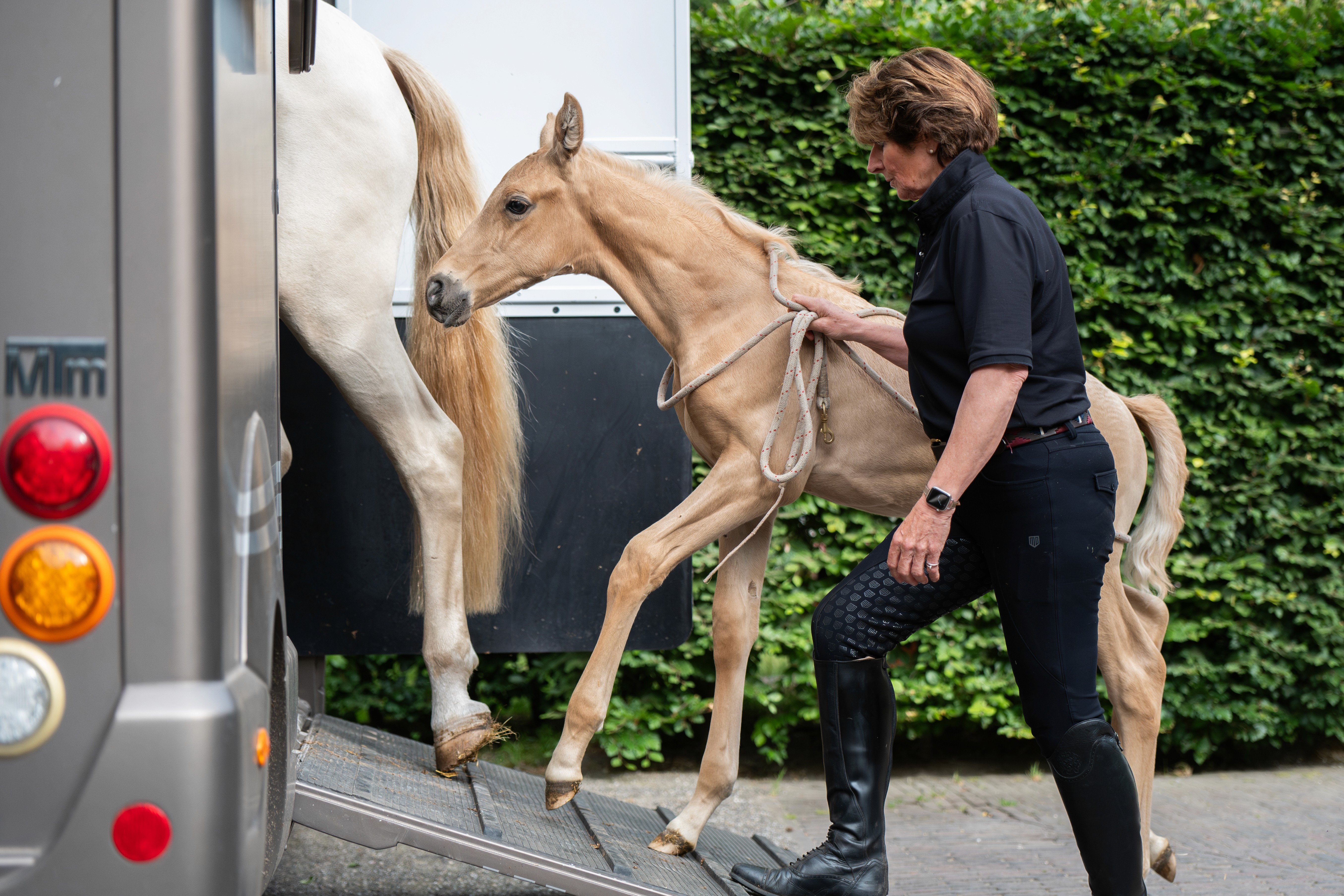
Instead, from the very first day, we prefer to guide them using what we call a "figure-eight rope" method. We try to introduce this soft, six-meter rope as soon as possible. The advantages are obvious: it is far less overwhelming because you are not leaning over them; you are simply walking quietly beside them.
When introducing the rope, you do not need to grab the foal forcefully by the shoulder and hindquarters. If there are two of you, one person can gently stop the foal at the shoulder and pet it, while the other quietly wraps the rope around. You will find that foals accept this very easily because the rope does not create scary, sudden pressure. It simply encloses the chest, the sides, and the hindquarters in a comforting way. It wraps around them. (see picture)
While handling the foal in this figure-eight rope, you can add subtle pressure to the front or the hind simply by playing around with your hand, which rests on the withers at the center of the eight. Because horses naturally yield to pressure, you can guide them very easily by adding local pressure to the front or back, and rewarding their correct behavior by immediately releasing that pressure—just like riding. When they are walking nicely next to you, the rope just hangs loosely around them without any tension. They pick up on this logic incredibly fast.
Be careful with the halter
Because you are guiding them with the rope, you will not actually need a halter for the first few weeks. We do introduce the halter, but we only put it on in the stable while the foal is already secure in the rope. We do not use it to lead them. They can wear the halter in the field for a couple of hours if you like, and we just practice taking it on and off without any consequences or pressure attached to it.
One of the common mistakes you can make is trying to lead a foal by the halter in those first few weeks. A foal has an inborn reflex to pull back whenever it feels pressure on its head. If it feels tension on the halter, it will start fighting the halter, and consequently fighting you. There is a real risk that the foal might rear up or fall over, and because their young necks are so vulnerable and fragile, that is a situation you really want to avoid.
Once they are comfortably guidable in the figure-eight rope, you can attach a lead rope to the halter—but still without using it to pull. Just let the foal get used to the feeling of a little weight dangling from the halter without fighting it. The next step is to start using the end of the 8- rope attached to the halter very loosely, combining it with the pressure they already understand from the figure-eight. By now, the foal understands that pressure on the chest from the rope means "whoa." If you simultaneously add a tiny bit of weight to the halter, they will soon learn that the halter also means "whoa," creating a safe, logical, and stress-free transition.
The final step
After a few weeks of working through these steps, you will reach a moment that feels genuinely rewarding: you will sense, almost intuitively, that the foal is ready. You will feel it yourself — "I can take the rope away. It will just walk next to me on the halter." That is a big step, because for the first time the foal no longer feels the familiar pressure from behind. It has to trust you and walk forward on nothing more than your physical guidance and the light suggestion of a lead rope.
There may be moments where it hesitates or stops. If that happens, resist the temptation to pull on the halter. Simply put the figure-eight rope back on the hindquarters as a gentle reminder to keep moving forward. It is a small step back that makes the next step forward so much easier.
To Wrap Up
I am absolutely certain that you will work this out yourself as you go. Foals are the most honest feedback you will ever get. The way they react tells you instantly whether you are on the right track. Everything I know about this, I learned by watching videos, observing, and above all, by trial and error. There is no single right way — just a general direction of softness, patience and logic.
What I can say is that I am very happy with the way our foals behave both when they are young and when they are older. Once you have gone through these steps together, you have given that young horse a wonderful foundation: an understanding of human interaction, a willingness to be guided, and the confidence to trust your intentions.
So give it a try. It just takes very little time, a few minutes a day…, but it gives back so much more. Handling these young ones and helping them understand our human world, is the greatest gift you can give them in life. I think that a lot of behavioural issues we have with grown up horses could have been prevented by these few minutes a day training in early life….