

Creating Pleasant Characters: Grab the Easy Wins
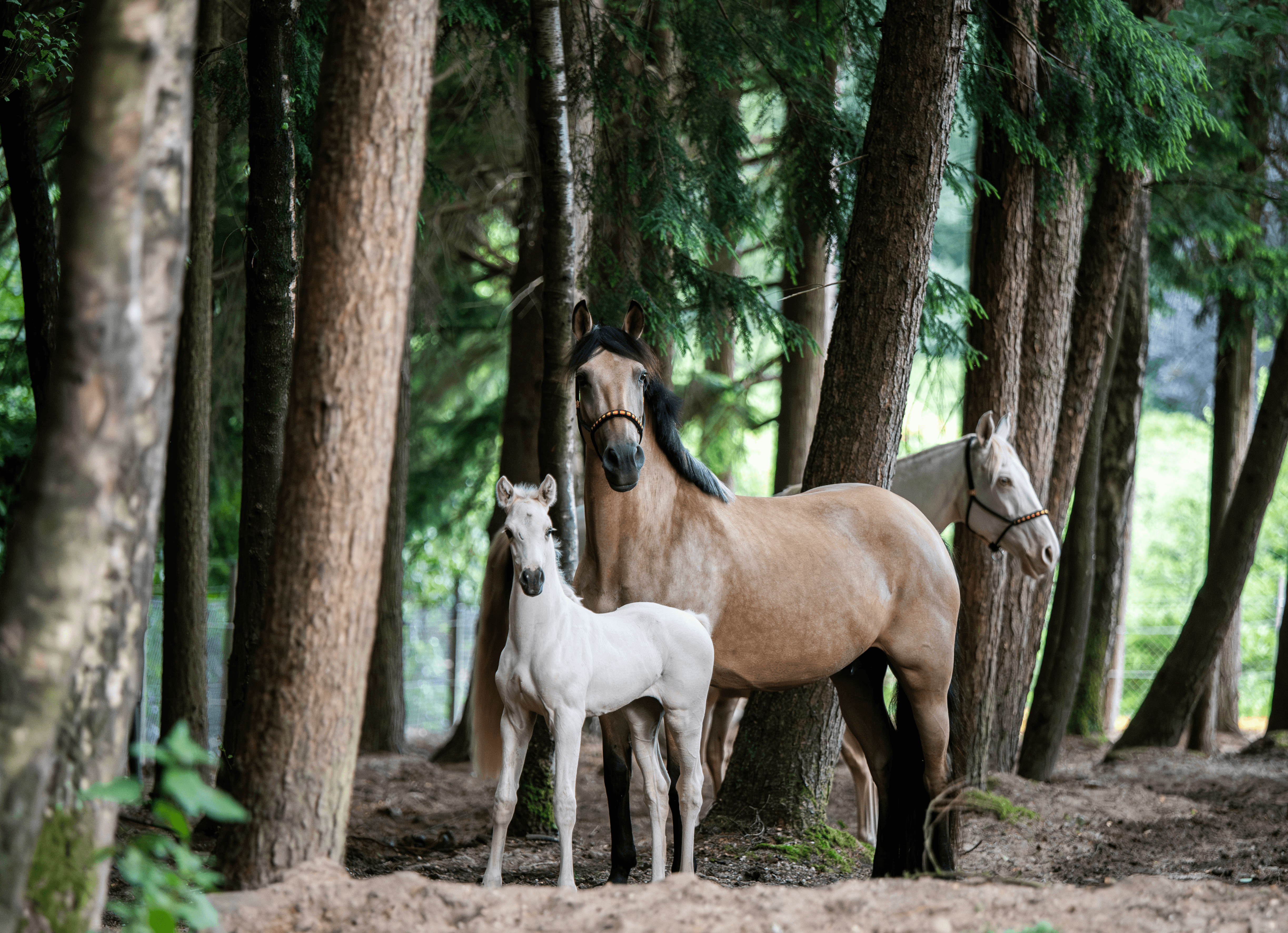
Training a Newborn Foal
Creating a manageable, pleasant horse is partly a matter of genetics. Choosing mares and stallions with kind, willing temperaments lays an important foundation. But here at our little stud farm, Stoeterij de Hoge Ginkel in Holland, we are firmly convinced that nurture is the essential part of the equation.
Think about how many horses end up needing to be retrained by horsemen such as Tristan Tucker, Will Rogers, or Pat Parelli. The vast majority of horses with behavioural problems did not develop those issues overnight — they stem from experiences, or a lack of the right experiences, in their very early lives.\
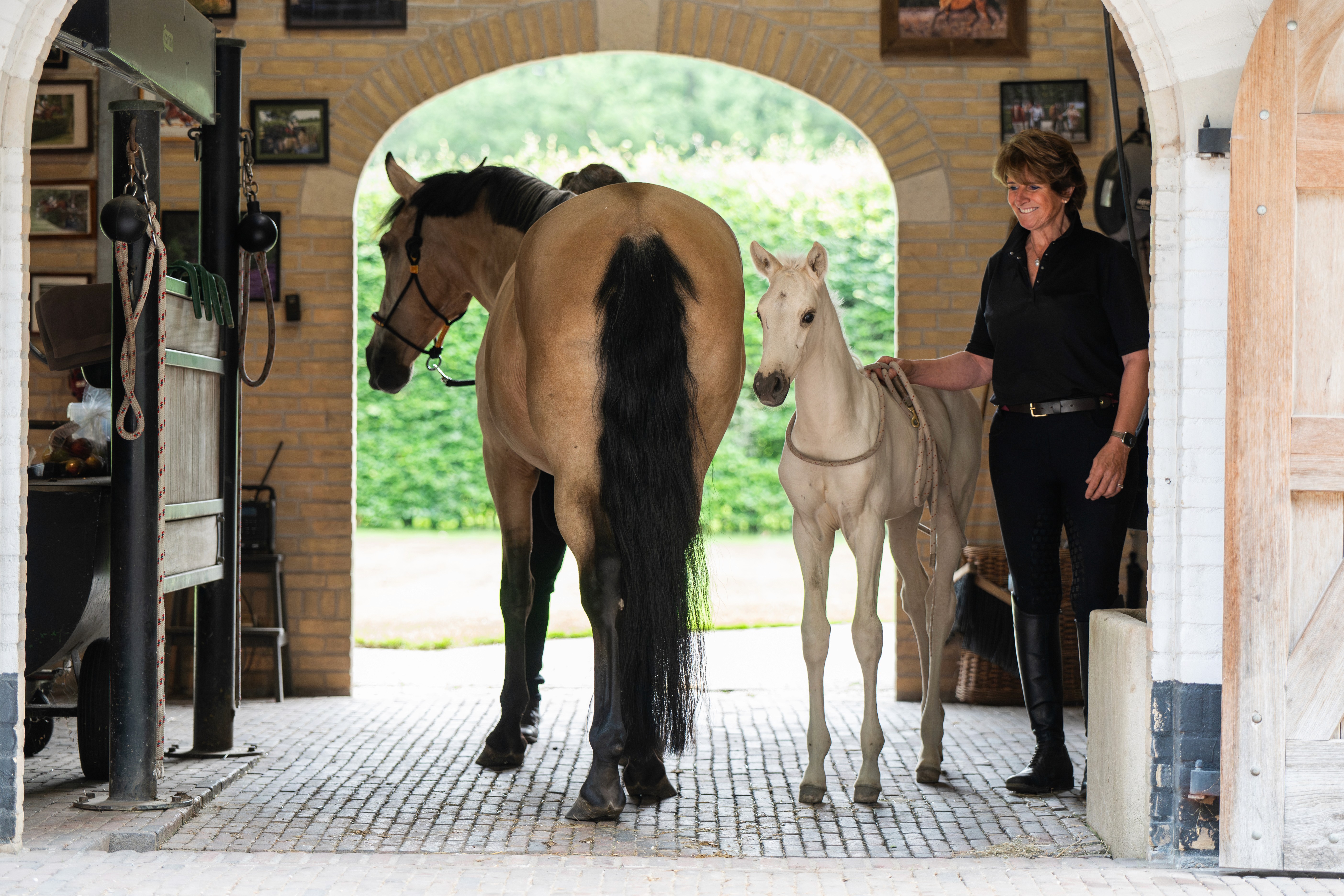
Foals are born without preconceived notions.
They arrive in the world as a blank slate, open and receptive to imprinting in those precious first few weeks. Most of us have seen the famous photograph of the ethologist Konrad Lorenz walking across a field with a string of young goslings waddling faithfully behind him — a perfect illustration of how profoundly early imprinting shapes a young animal's perception of the world. The same principle applies to foals.
During this imprinting phase, you can teach young animals a great deal. One of the most important lessons is simply this: humans are in charge, and humans can be trusted. When we communicate that clearly and kindly — when we listen to what the foal is telling us and respond with understanding rather than force — the foal will feel safe in our presence. And as any horseperson knows, a horse that feels safe is a horse that is pleasant to be around and it actually wants to be around you.
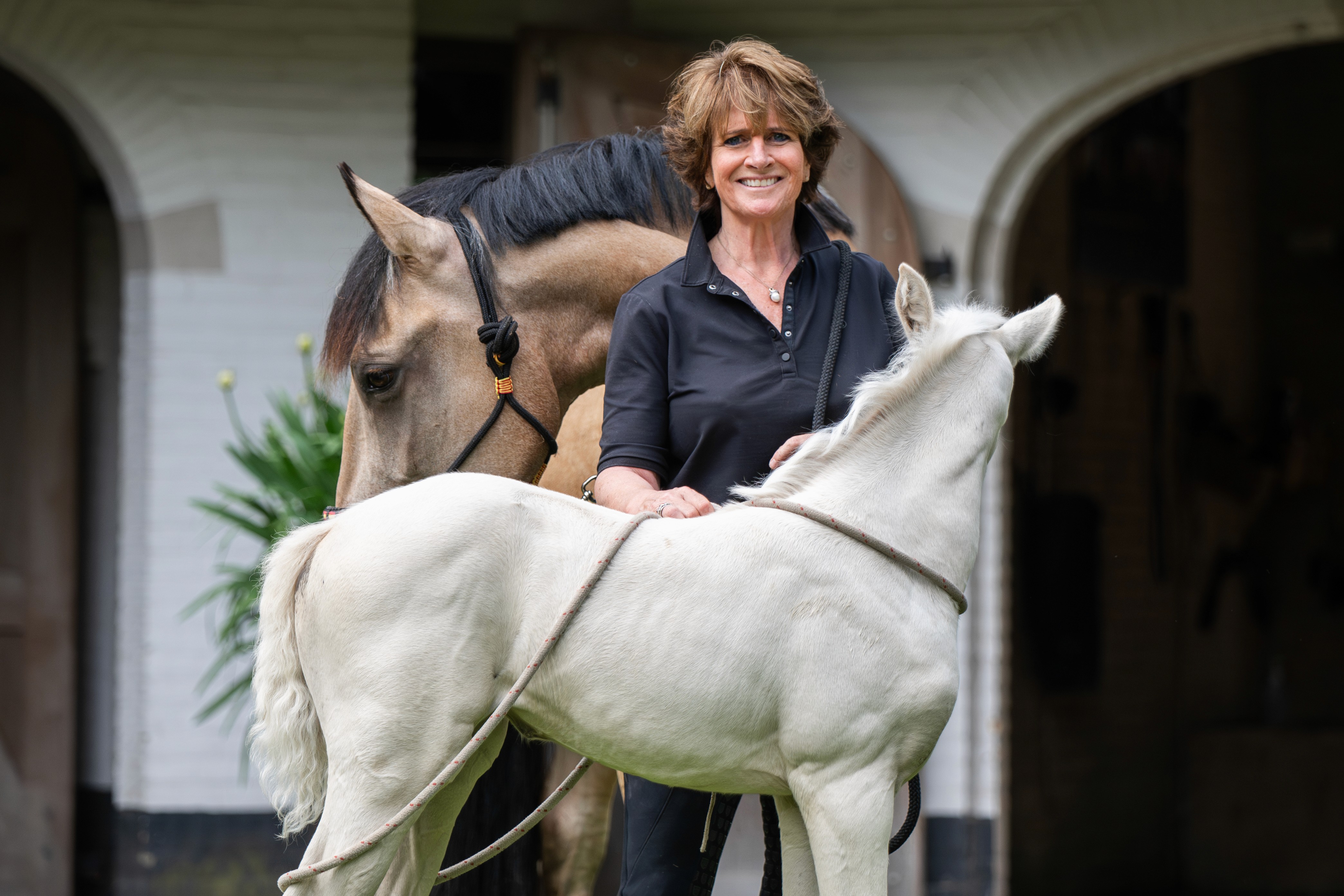
The approach itself is straightforward. There is no need for harshness whatsoever. Clear, consistent requests, combined with an immediate release of the demand the moment the desired response is given —(pressure-release, just as in riding) that is all it takes. Horses are extraordinarily sensitive animals and they learn remarkably quickly when the communication is fair and easy to understand.
The real opportunity lies in those first few weeks of life, and there are so many easy wins available to anyone willing to invest a little time. Yet all too often, foals simply run out to the field alongside their mother in the morning and run back to the stable alongside her in the evening. They spend those twenty-four hours in their mother's company — which is, of course, beautiful and entirely natural — but in doing so, they learn almost nothing about living in the human world.
Those early weeks pass quickly. The window of maximum receptivity does not stay open forever. By taking just a small amount of time each day to quietly handle a young foal, to introduce it to being touched, led, and gently guided, you are laying the groundwork for a horse that will be a genuine pleasure to work with for the rest of its life.
To Wrap Up
At De Hoge Ginkel, we believe those early moments are among the most valuable investments you can make in a young horse. We have created procedures that have given us great results in totally relaxed, trusting, happy foals that have proved to grown up into very manageable horses. I will dedicate a blog to these procedures, that I certainly have not invented myself, worked it out from information available on all sorts of instruction video’s. Try to find the method that suit you best, there are quite some ways to Rome, the big gain is you spending time on the foal. Grab the easy wins — your future self, and your horse, will thank you for it.